CCTV Drain Inspection Carrington
A CCTV drain inspection in Carrington puts a camera inside the pipe so you can watch the fault on a monitor, at the exact point it sits. Drains that keep blocking, or a repair you want proof of before committing, are what this job answers. You get the footage, the diagnosis and a fixed figure ahead of any work.
Beyond the camera. For the wider blocked drain service, see the blocked drains overview. Every other service we run on the peninsula starts from the plumber in Carrington page.
Licensed plumbers and gas fitters · NSW Lic. 359278C
Last updated September 2026
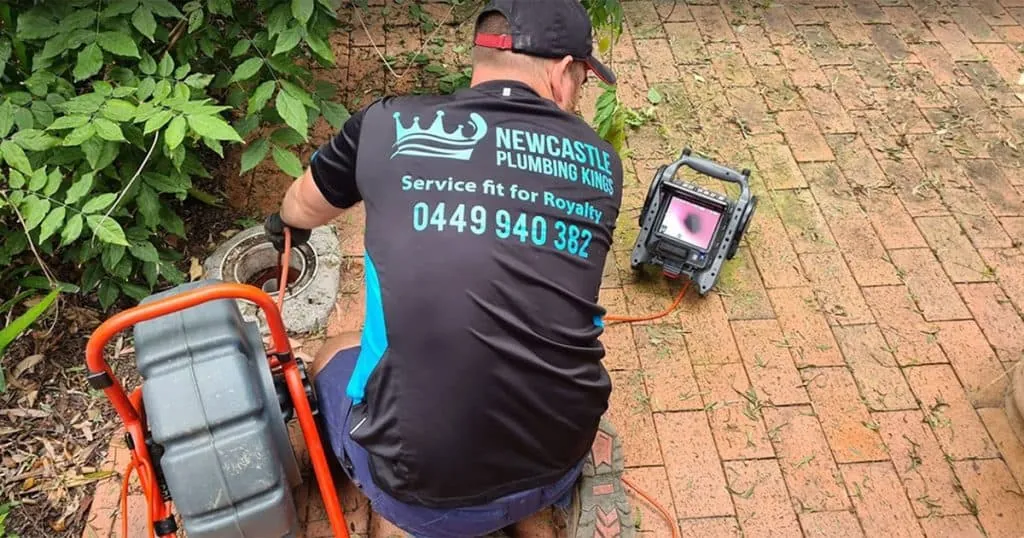
Why put a camera down the pipe?
Because drains lie to the eye. A backed-up gully could mean roots, a cracked joint, a sagging section or a line half full of groundwater, and no two of those call for the same fix.
The camera settles it:
- Roots fed into a joint show up as a hanging mass with the entry point visible
- Displaced or sheared clay sections appear as a step or a dead end in the pipe
- Infiltration shows as weeping seams where the surrounding wet fill pushes in
- Fat, scale and debris build-ups sit plain on screen before anyone clears them
On a peninsula where the original sewers are earthenware jointed in mortar, the footage is what turns a guess into a plan.
From access point to report
- 1
Ring or send the form
Call (02) 4063 1232 or use the form to explain the fault. We ask enough to bring the right equipment the first time.
- 2
A fixed price first
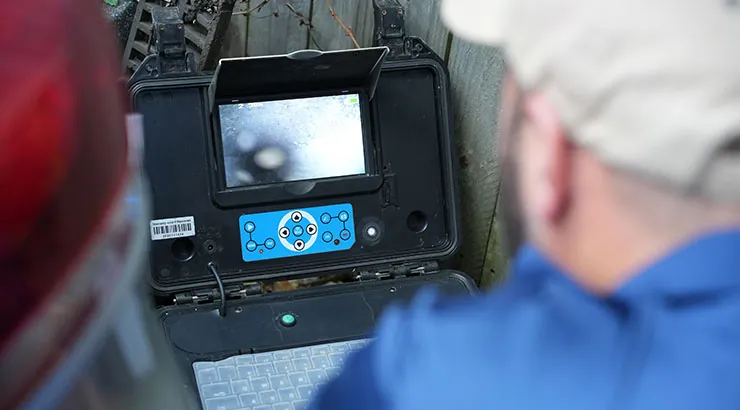
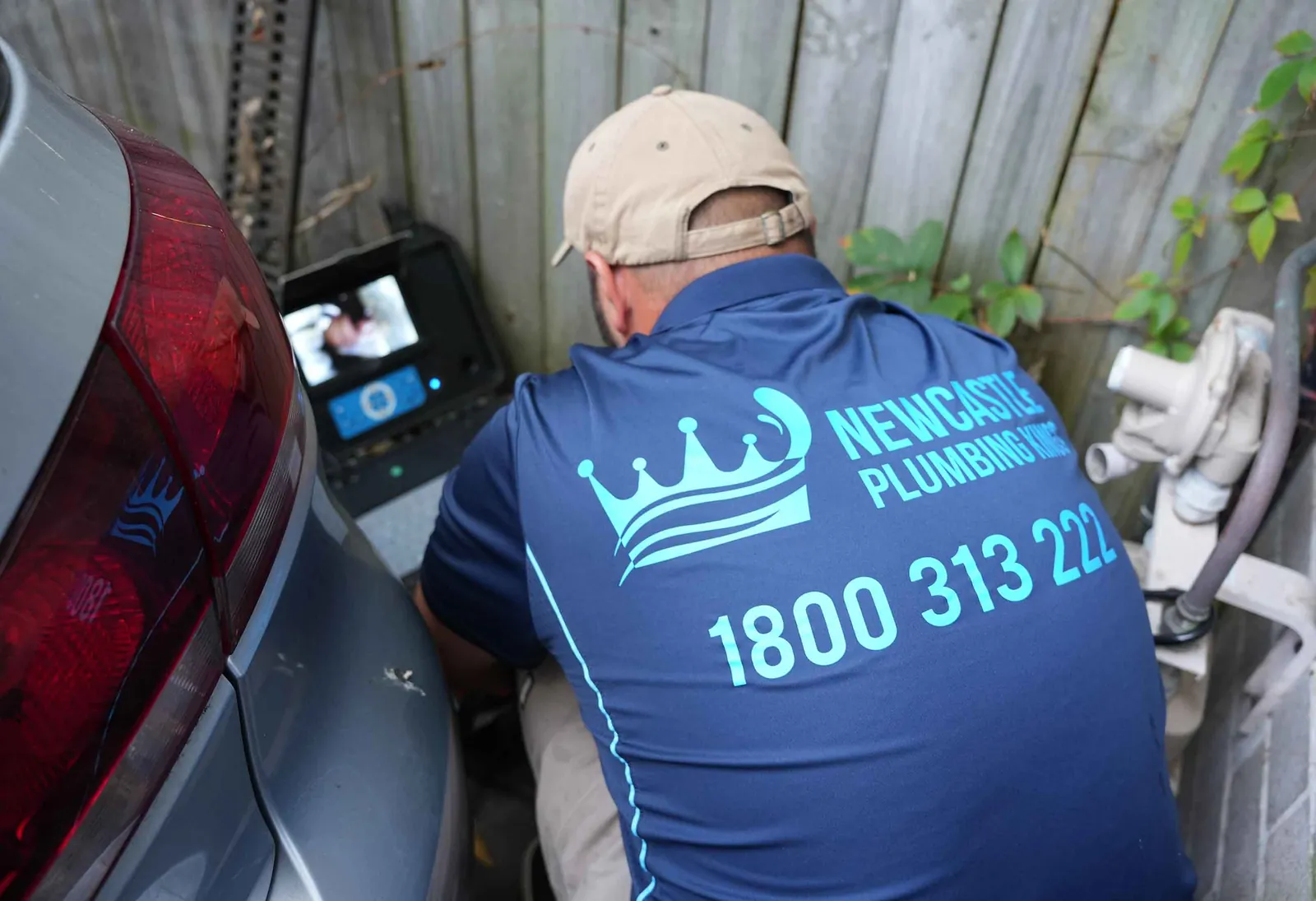
A plumber inspects the job and names a fixed figure up front. Nothing gets started until you give the go-ahead. 3. The camera travels the line from the nearest access point, recording as it goes, with the picture watched live and the fault located along the run.
- 3
Covered for a year
Every job carries our 365-day warranty on all work. If something we did isn't right, ring the same number.
If the footage points to a fix, it will be one of three: high-pressure jetting to clean the pipe wall, root cutting where the problem is living growth, or pipe relining when a cracked length can be lined rather than dug up.
What shapes the figure on a camera inspection?
We provide up-front, honest quotes that will always match the final price, should you decide to go ahead.
The drivers behind that figure:
- Line length, since every extra metre of sewer is more cable to feed and more footage to review
- Access, because an opening under pavers or soil has to be found and uncovered before the camera goes in
- What the footage reveals, as a clean bill of health costs less than a diagnosis feeding into a repair
- The hour, since a camera job after dark is billed at the after-hours rate
You get the report and the quote together, so the decision is yours with everything on the table.
What the ground does to the pipes
The fill moves, and the pipes record it
Wet ground makes small cracks worse
A century of jointed earthenware
What a Customer Said
Our blocked toilet morphed into a huge plumbing earthworks project due to extreme pipe damage from tree roots.
When the camera is not the answer
When we're not the right call: a sag in the line caused by settling fill needs a repair quote, not another diagnosis, and we price that as its own job. Street-side stormwater flooding tied to overwhelmed pits sits with the council, and we help you report it. A leak under a slab the drain camera cannot reach is traced with our leak detection gear instead.
Common Questions From These Streets
Do I need a camera pass before my drain is cleared?
Not always, but on the Carrington cottage grid it saves guesswork. A slow drain can be paper caught on an offset joint or a section sheared by settling fill, and the footage tells us which before we pick the method. You see the same picture we do and the fix is quoted on what is actually in the ground.
Do I get to see the footage from my Carrington drain?
Yes. The camera picture is shown on screen during the inspection and you can watch it live. We talk you through what the lens passes, from the first offset joint to any root mass or collapsed section, so the diagnosis is not a story you have to take on trust.
Can a camera find the cause of repeat blockages in older clay pipes?
That is exactly what it is for. The earthenware runs under the heritage grid here were jointed in mortar over a century ago, and the footage shows where those joints have cracked, slipped or opened into the surrounding wet fill. The report turns a recurring nuisance into a repair plan.
Does an inspection need any digging or yard damage?
None at all. The camera travels inside the pipe from an access point like a gully or inspection opening, so lawns, paths and cottage gardens stay untouched. Digging only enters the conversation later, if the footage reveals a collapsed section that needs opening up or relining.
Need a plumber? Call or send the form
Call (02) 4063 1232 or send the form below. Available 24/7, you see a fixed figure ahead of any work, and every job carries our 365-day warranty on all work.
Request a callback
Leave a name and number and a plumber will ring you back.